

Most people know Apple and OpenAI as partners. ChatGPT sits behind Siri AI. The marketing is cordial. The court file is not.
In San Jose, under case number 5:26-cv-07078, Apple is suing OpenAI, io Products, and two former Apple engineers—Chang Liu and Tang Yew Tan—for alleged trade-secret misappropriation and breach of contract. The complaint was filed on July 10, 2026. On October 27, Judge Edward J. Davila signed an order expanding expedited discovery. Headlines said Apple “won more evidence.” The lesser-known details appear to live in that order—and in Apple’s complaint, which remains a set of allegations, not findings of fact.
Read this carefully: nothing below is a verdict. A complaint asserts; it does not prove. Discovery orders compel production; they do not establish guilt. Where this article recounts what Apple claims, or what a judge ordered parties to produce, that is all it is doing. OpenAI and the individual defendants have not been found liable here.
What the case appears to be about
Apple’s filing is blunt: former employees, it alleges, took confidential hardware know-how to speed OpenAI’s push into consumer devices. According to the complaint, OpenAI’s hardware vehicle began as io Products—co-founded with ex-Apple leaders including Tan—and was absorbed in a deal Apple pegs at roughly $6.5 billion. Tan, who according to Apple spent more than two decades there and served as vice president of product design for iPhone and Apple Watch, is described in the filing as OpenAI’s chief hardware officer. Liu, Apple says, spent eight years as a senior system electrical engineer on sensitive iPhone work before leaving for OpenAI in January 2026. Those biographical claims come from Apple’s papers; they have not been independently adjudicated in this piece.
The trade secrets Apple lists do not read like abstract “AI sauce.” As pled, they look more like a factory floor and an unreleased roadmap: power management, battery design and manufacturing, metal finishing, component architecture, manufacturing processes, supplier relationships, and unannounced product details. In the October order, the court adopted a narrowed definition of “Apple Originated Information” that still appears to reach consumer-hardware engineering, metal finishing, batteries, and labeled confidential Apple material learned by Apple employees who later joined OpenAI or io—again, as a discovery definition, not as a finding that such information was misused.
Details that did not travel far outside the docket
The following points are drawn from public court records. They are not “scoops” invented here. They simply seem to travel less often in short news briefs. Treat each as what a filing says or an order requires—not as proven misconduct.
- Exit procedures, according to Apple. After Liu left, Apple says it asked him to sign a confidentiality reminder, schedule an exit interview, and confirm he had returned devices. Apple alleges he did not respond. Whether that account is complete is for the litigation to test.
- A laptop and a laugh—as alleged. The complaint claims messages on an Apple-issued work laptop in which Liu treated the situation as a joke—“LOL,” “so funny”—and that over subsequent weeks, while working on OpenAI hardware, he accessed and downloaded dozens of confidential Apple hardware files about unreleased products, specs, and presentations. Those are Apple’s allegations. The defendants would presumably contest them; their defenses belong in the docket, not in speculation here.
- Recruiting advice—if the claim holds. Apple claims Liu coached a former colleague he was recruiting on how to “avoid trouble with the security team” when copying files, and told her which confidential material on unannounced products to study before an OpenAI interview. That would be serious if borne out. It remains an allegation.
- Encrypted and chat apps named in discovery. The October 27 order does not prove misuse. It orders Liu and Tan to identify devices, accounts, and apps used in connection with Apple Originated Information—explicitly including LINE, Signal, Telegram, and Kik, plus personal and corporate accounts. Naming those apps in an interrogatory is not evidence that secrets moved through them; it appears to be a request for an accounting.
- AI tools as potential evidence. Apple obtained expedited production of records of Liu’s use of ChatGPT, Claude, Codex, OpenClaw, and other AI tools—on a Mac Mini and personal accounts, and on corporate devices—from January 23, 2026 onward, including activity Liu characterized as “personal experimentation.” The dispute appears to include whether confidential Apple material was fed into or handled alongside those tools. That question looks open until the records are produced and tested.
- A specific Apple MacBook Pro in the interrogatories. The public order references an Apple-issued 16-inch 2021 MacBook Pro (serial number redacted) among devices to be accounted for. That is a discovery detail. Any inference beyond “Apple wants it identified” would be premature.
- Batteries, power, metal finishing—topics for deposition, as ordered. The court has allowed certain corporate deposition topics covering work by Liu, Tan, Yu-Ting (“Alyssa”) Peng, and another redacted person involving Apple-originated information on power management, batteries, and metal finishing—if and as those depositions proceed. Separately, Apple’s complaint alleges a trusted manufacturing partner was misled into performing a confidential metal-finishing technique for OpenAI’s benefit. That partner narrative is pled, not adjudicated.
- Hiring materials for Apple talent. An earlier October 13 discovery order reached interview guides, checklists, and “Technical Deep Dive” materials used when OpenAI’s Consumer Hardware and Robotics groups interviewed Apple candidates—and LINE chats between Liu and Peng since January 1, 2026. What those documents contain has not been established as a public finding in this article.
- A pre-suit letter. Discovery papers reference Apple’s February 23 pre-suit letter to OpenAI. The dispute appears not to have begun with the July filing; formal warning seems to have come earlier. The letter’s full contents are not recited here.
- What Apple did not get—yet. The same October 27 order denied, for now, broad expedited discovery into OpenAI’s own devices and accounts, its internal investigations, and certain deletion narratives at the corporate level. Judge Davila pushed those into ordinary merits discovery. On the public record, Apple is winning early access; it does not appear to have a blank check.
The partnership sitting in the other room
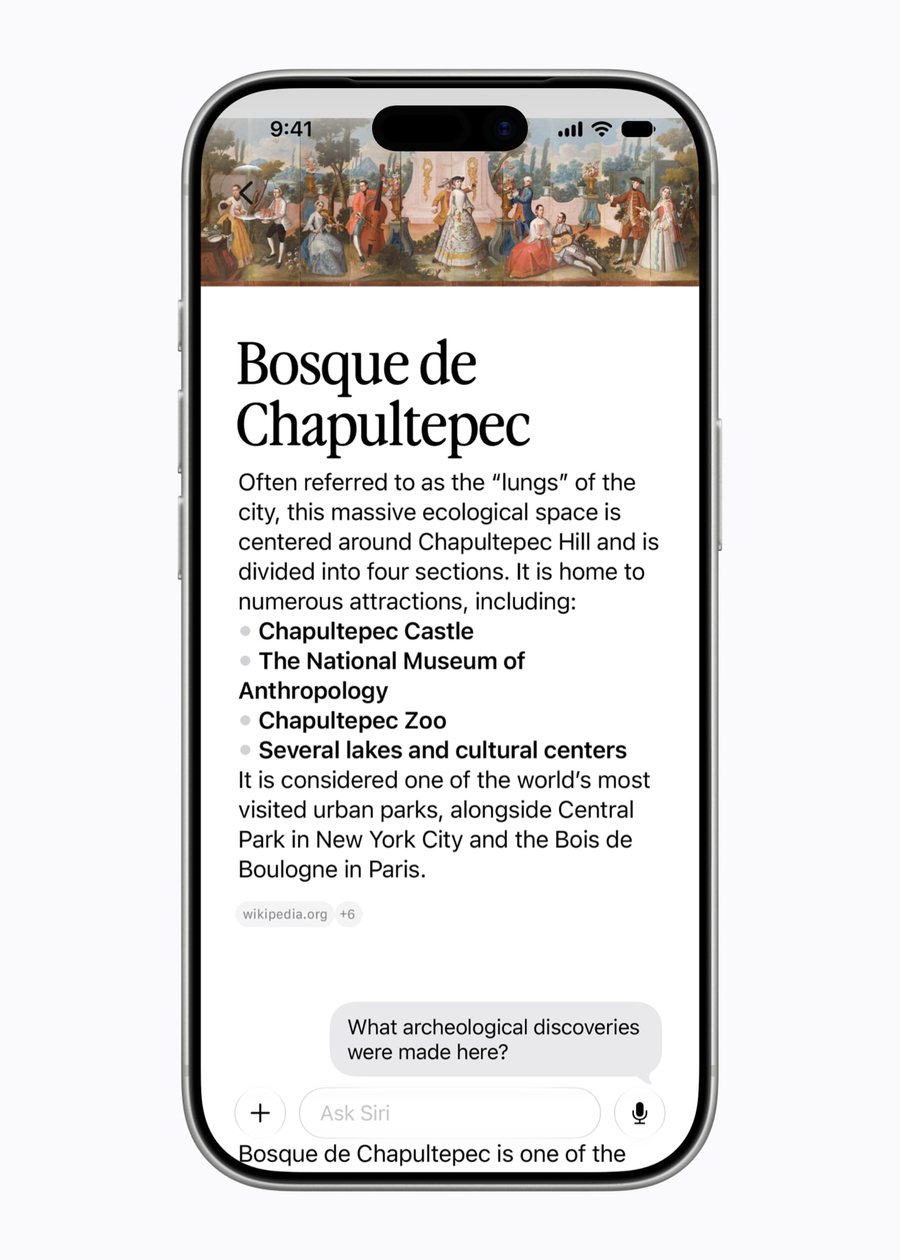
None of this erases the product reality users see: OpenAI technology inside Apple’s assistant stack. That commercial relationship and this hardware lawsuit can coexist. They should not be confused.
There is a second, separate drama many readers mash into one headline: Elon Musk’s xAI/X antitrust case against Apple and OpenAI over ChatGPT’s place in Apple’s ecosystem. In September 2026, claims against Apple in that Texas case were dismissed after a resolution, according to court filings and contemporaneous reporting; claims against OpenAI continued, and a judge later refused to compel production of the confidential Apple settlement for OpenAI’s summary-judgment purposes. Different courthouse. Different theory. Same awkward appearance—Apple and OpenAI as allies in one market and adversaries in another.
For users, the practical question looks like governance, not gossip. If the companies that power a phone’s assistant are also litigating over alleged industrial theft in hardware, trust starts to feel like a product feature. More transparency about boundaries—what is shared for Siri AI, what is walled for devices—would seem useful. That is an editorial judgment, not a legal conclusion.
A polite critique of both postures
Apple’s complaint reads like a company that decided partnership courtesy had a limit. That posture is understandable if the facts support it. Trade secrets are how a hardware company survives. If even a fraction of the recruiting-and-download narrative were later proven, OpenAI’s hardware culture would look reckless.
OpenAI, for its part, has not been convicted in this case. Hiring Apple veterans is legal. Building devices is legal. What is not legal—if proven—is misappropriating trade secrets or improperly soliciting them. OpenAI’s public hardware ambition was always likely to collide with Apple’s reflex for secrecy. The careful corporate response would seem to be aggressive compliance and clean rooms. Whether that happened is precisely what discovery is for.
Courts exist because companies fail that test, or appear to. Appearance is not proof.
What happens next
On the face of the October 27 order, defendants have tight deadlines—on the order of fourteen days—to produce newly compelled records and answer narrowed interrogatories, subject to whatever the parties and the court do next. Liu, Tan, and Peng face depositions on an expedited track tied to those productions, as ordered. A jury trial has been demanded; scheduling reports have pointed toward mid-2027. Between now and then, most new facts will likely arrive as PDFs, not press releases—and many will still be contested.
A last word
The Apple–OpenAI story users are sold is assistance: smarter answers, friendlier Siri. The story taking shape in Judge Davila’s courtroom, as Apple frames it, is inheritance: who owns the hard-won craft of making physical products, and what happens when AI companies hire people who already know Apple’s shortcuts.
You do not need a law degree to follow it. You need the patience to read past the word “partners,” and the discipline to wait for proof before treating allegations as history.
The final question
When the same two names power your assistant and litigate over your next device’s innards, whose incentives are you actually trusting—and what would it take for both sides to show their work without asking you to assume the ending?