
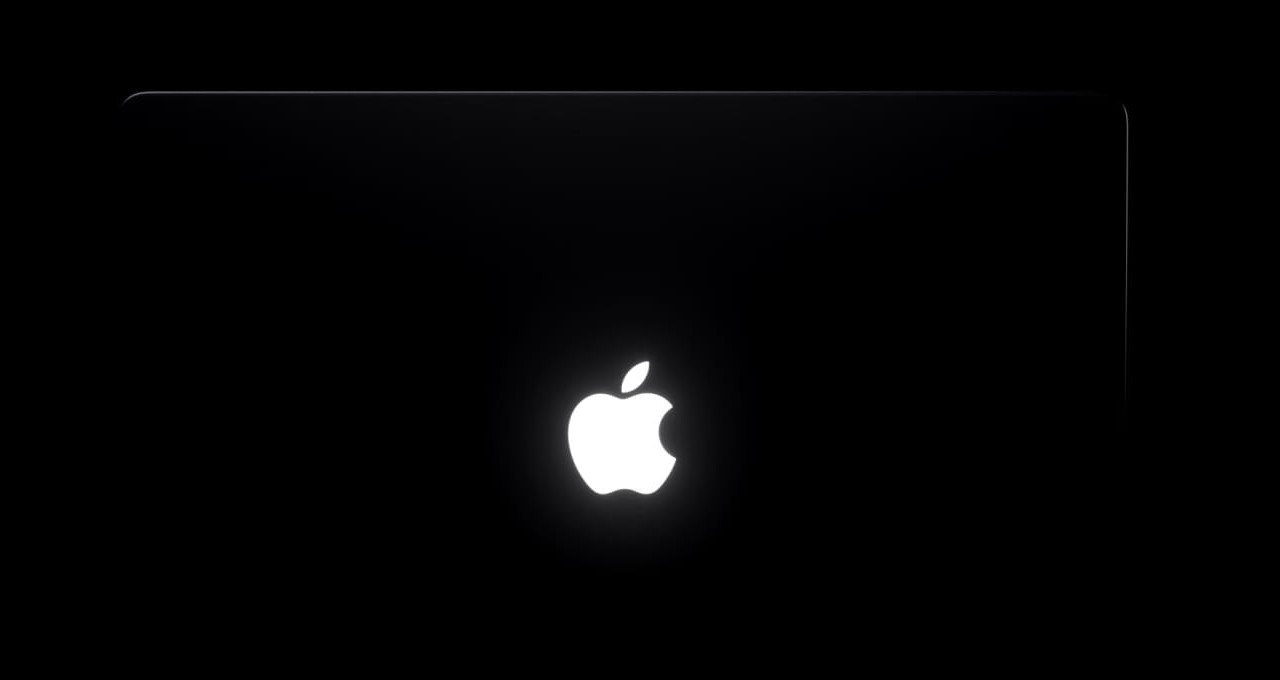
This is the computer the piece is about. The MacBook Pro with PROLED XDR, in 14- and 16-inch, on sale Friday, November 6. On October 28 John Ternus introduced it with a line that was the product: “We’re glowing with excitement over the new MacBook Pro.” The apple on the lid lights. Apple’s film opens on that lid, in the dark, before it turns the screen toward you.
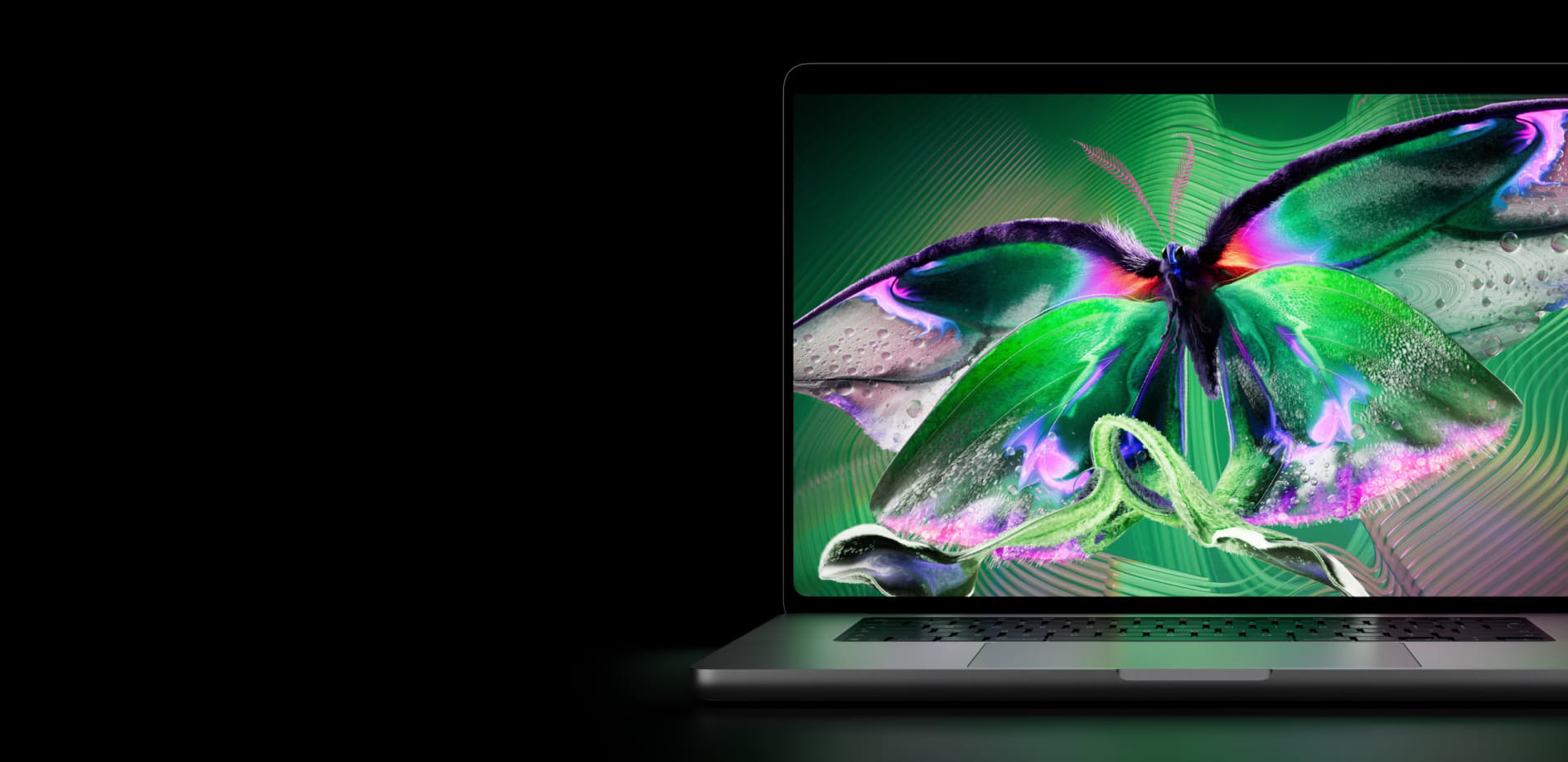
The older machines come after this, and only because the light has a past. For years Apple could not decide which of you the apple was for. Then it took the light away. The reason to look back is the laptop above, not the other way around.
It faced the person about to open it
Close a current Mac and look down. The apple is upside down. The leaf points at you. It feels like a mistake until you open the lid and someone across the table sees it the right way up. For years, the choice ran the other way.
On the PowerBooks of the late 1990s, the apple on the lid was right-side up when the computer was shut, which is when you are standing over it, looking for the edge that opens. Raise the lid, and the person facing you watched an apple standing on its leaf.
The reason that has come down from people who were in the building is that Steve Jobs wanted it that way. Joe Moreno, who worked at Apple from 1998 to 2007, later wrote that the Design Group had studied the placement and found a problem: if the logo was right-side up with the lid open, it was upside down with the lid closed, and people kept trying to open the laptop from the wrong end. Jobs, he was told, thought the person using the machine mattered more than the person watching it. Ken Segall, who sat in meetings with Jobs, remembers the question being put almost that baldly. Which mattered more — the logo looking right to the owner before the PowerBook was opened, or looking right to the rest of the world once it was in use?
The world won, but not that year. Opening a laptop from the wrong end corrects itself in a few seconds. An upside-down apple lasts as long as the lid stays up. Moreno’s line, after the decision was reversed, was that the first problem fixes itself and the second one does not. There was a smaller embarrassment in the meantime. Accounts from that period say that when a PowerBook was loaned for a film, someone covered the logo with a sticker so the camera would not inherit the backward apple. It did not always work. Moreno later pointed to Sex and the City as a shot the upside-down logo still made.
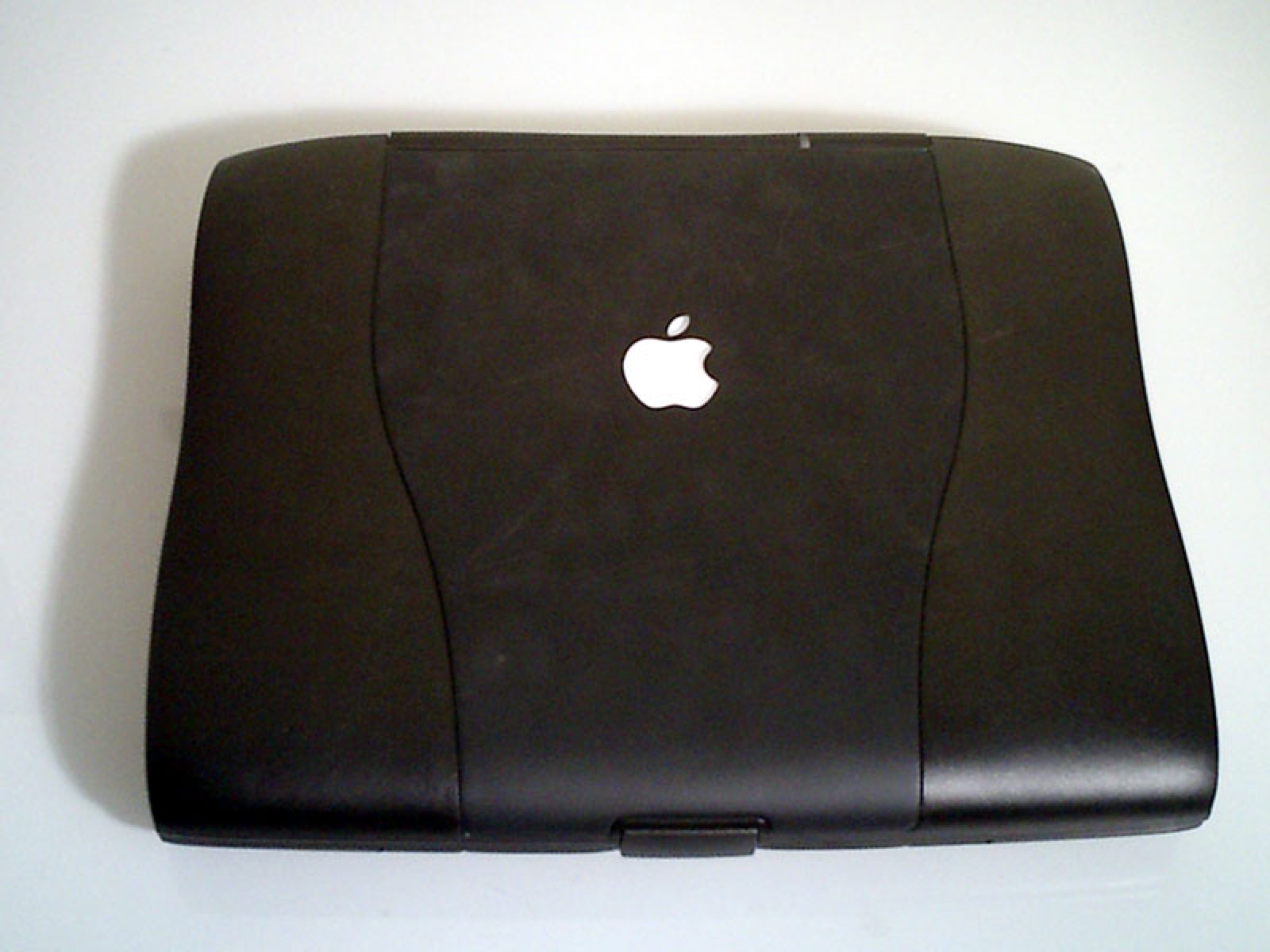
The first light did not have a lamp of its own
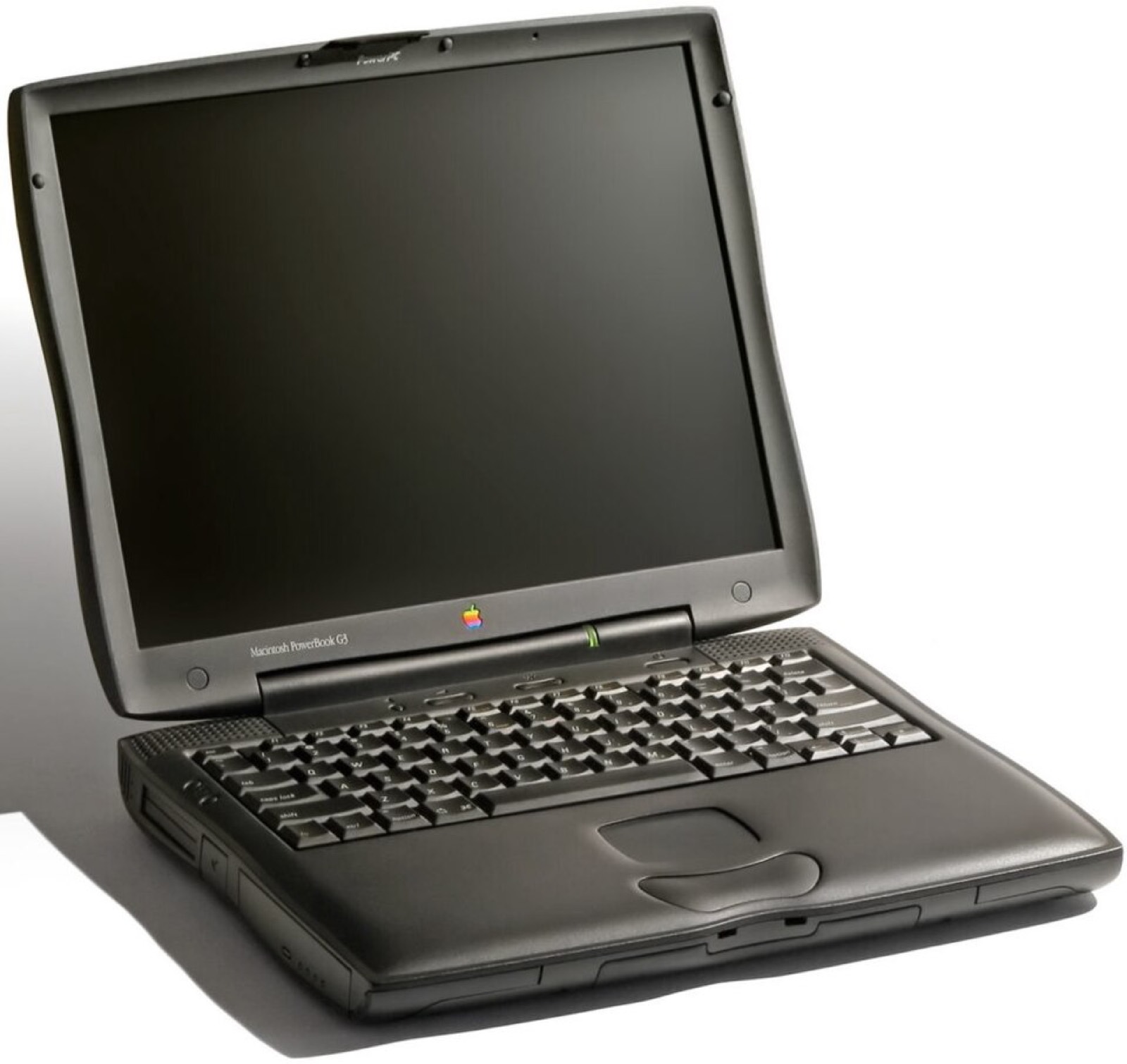
The glow arrives on May 10, 1999, with the PowerBook G3 that people still call Lombard, or the Bronze Keyboard. It is the first Apple notebook with an illuminated logo. To the person sitting opposite, it is still upside down.
There is no bulb behind that apple. The logo is a clear piece set into the lid, and the light is the backlight of the display, leaking through. Turn the screen down and the apple dims. Turn the screen off and the apple goes out. That link is not a setting. It is what a hole does. The PowerBook G3 that followed, Pismo, in 2000, kept both habits: it glowed, and the room still saw it reversed.
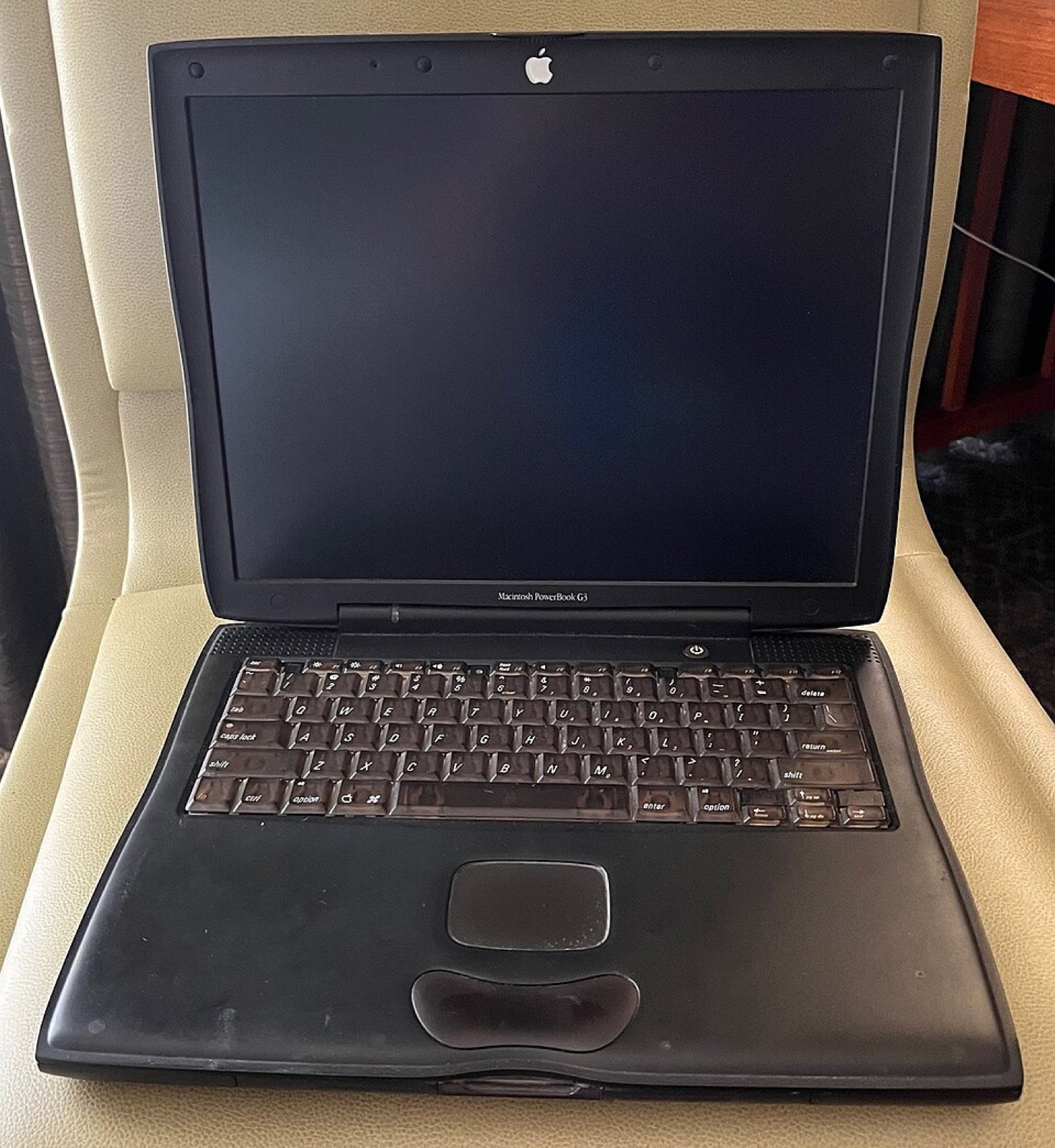
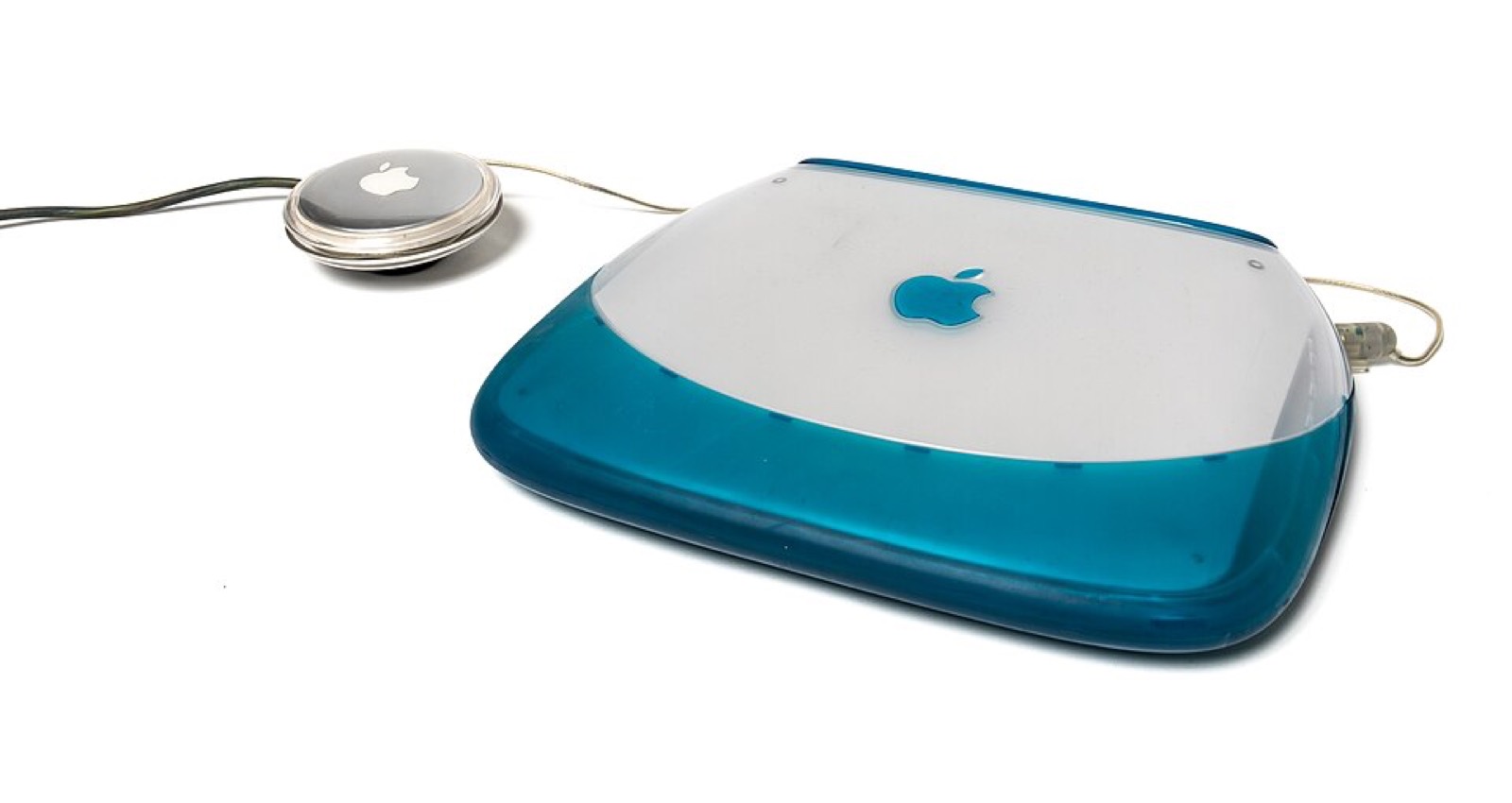
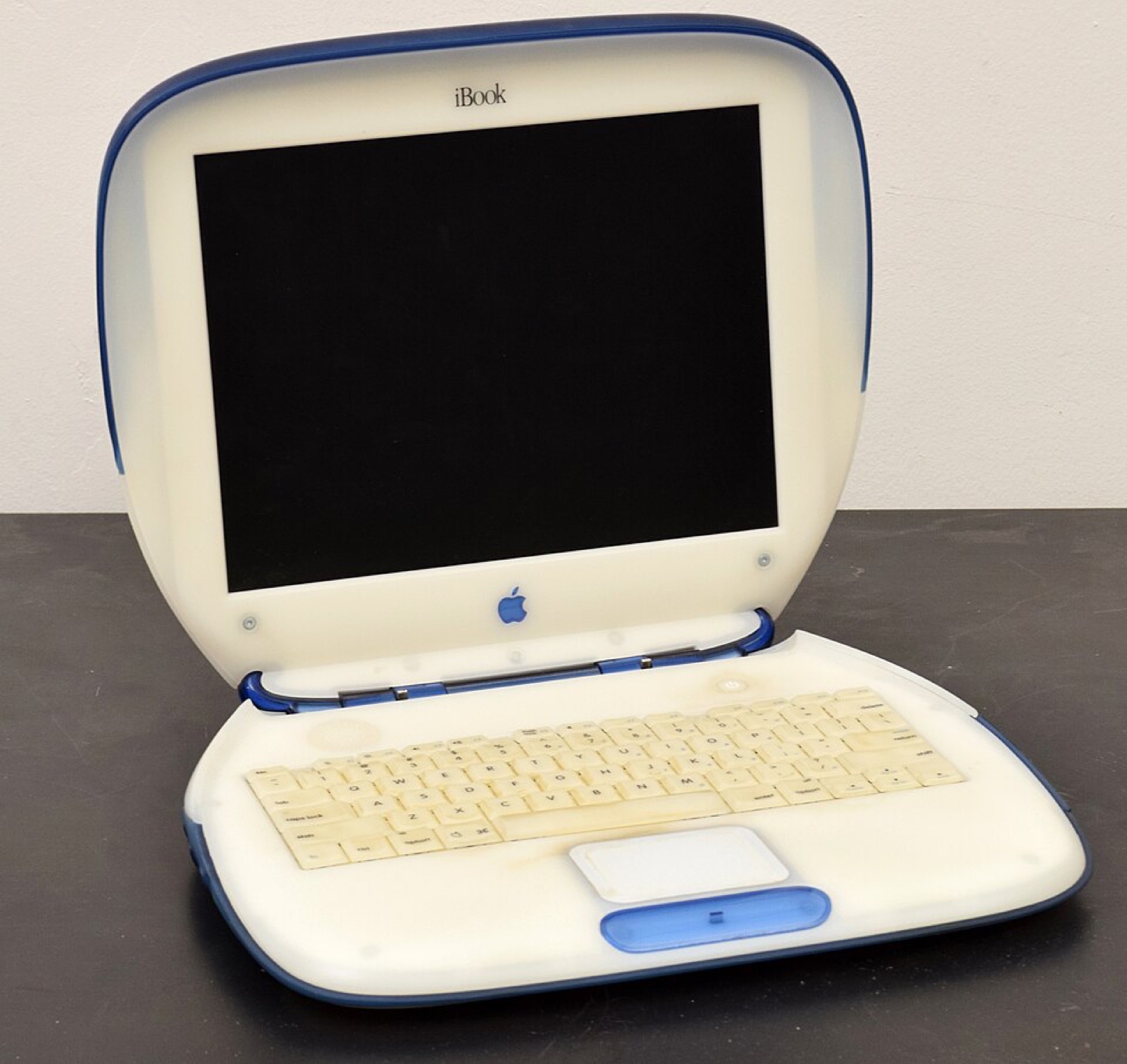
The first iBook, the colored clamshell of the same year, is a different object. Its apple is glossy and set into the lid, and it does not glow. Color came before light. Open one and there is a second apple, below the screen, facing the person typing, already the right way up. The lid and the typist were still being served by two different logos.
Then the room got the right way up
In 2001 the apple turns around. The white iBook and the titanium PowerBook G4 are built so that the person across the table sees the logo standing properly, and sees it lit. Same trick as 1999: a clear insert, and the light of the panel behind it. From here through the plastic MacBooks, the Air, and the unibody Pro, that is the apple people mean. You could pick a Mac out of a dark café without reading a word on the screen.
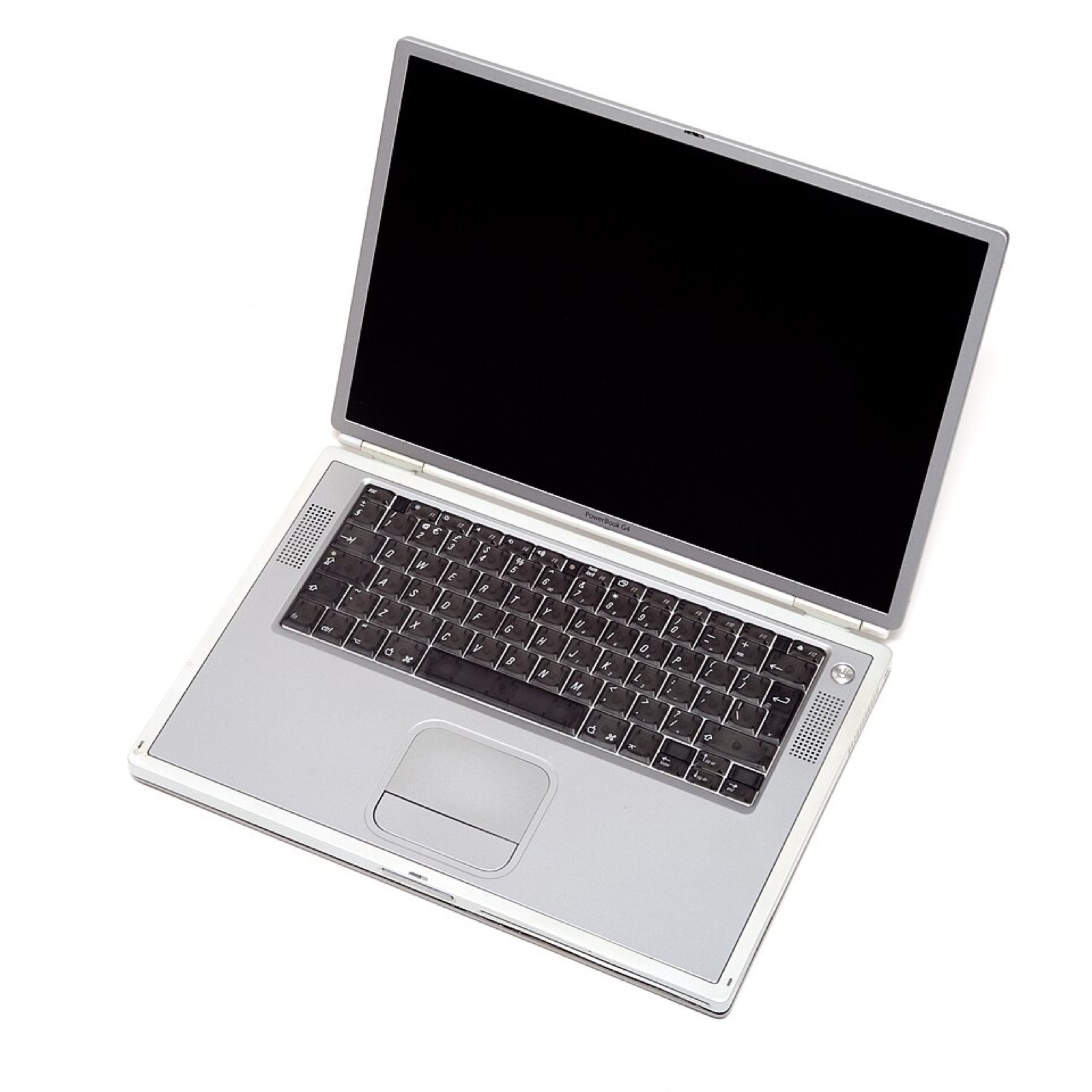
Then the lid got too thin for a hole
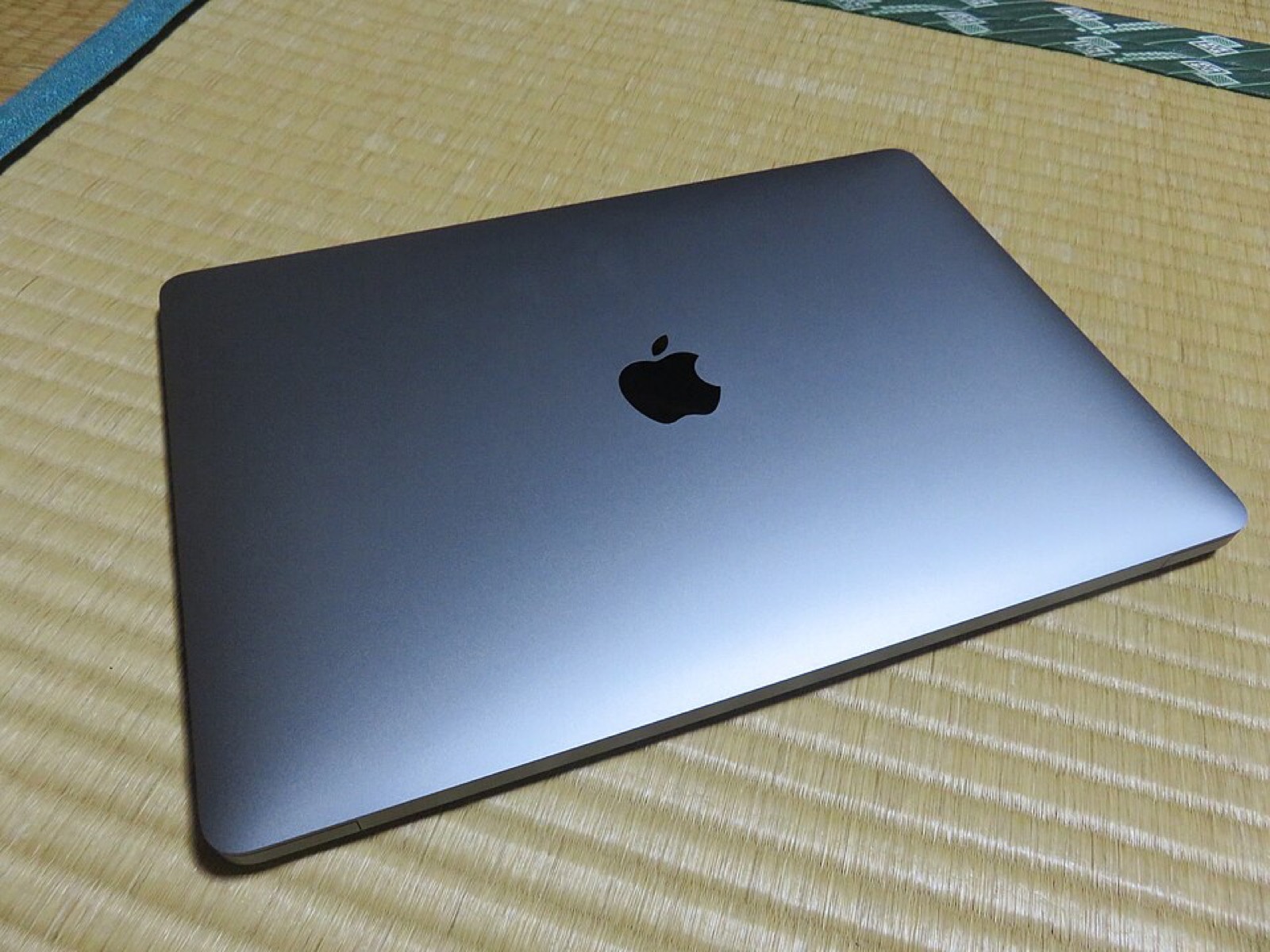
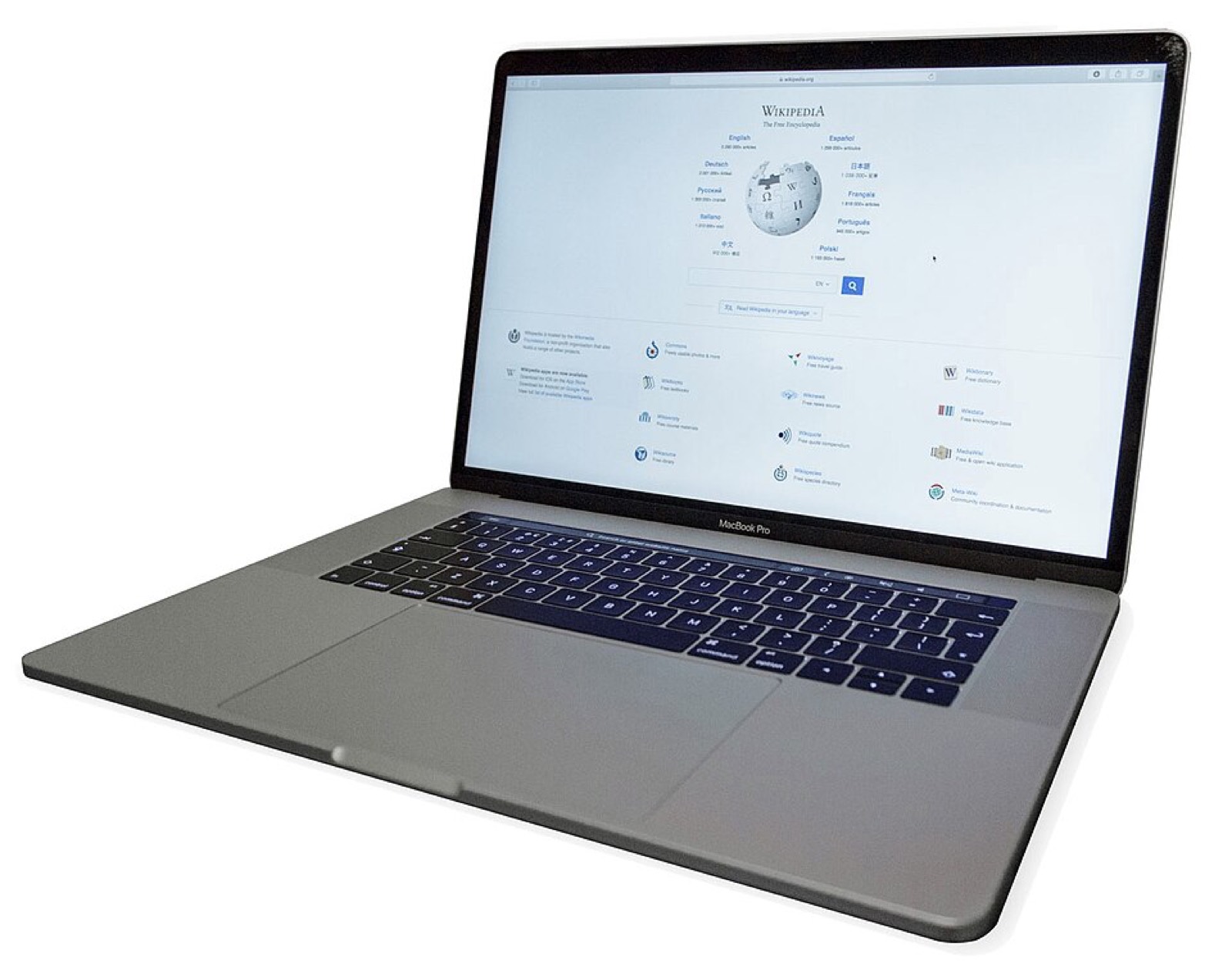
Apple never published a eulogy. The 12-inch MacBook of 2015 is the first notebook without the light. The MacBook Pro redesign of 2016 finishes the job on the machine people actually bought for work: a polished apple, metal in metal, that shows only when the light in the room hits it.
The company did not stand up and explain the loss. The account that has stuck, from people who lived with the machines, is practical, and it should be read as that account, not as an Apple statement. The lid had become too thin to give up a hole. A brighter, wide-gamut panel and a cutout did not get along. In sun, light came back through the apple and sat on the screen as a hotspot, the logo written onto the picture you were trying to see. A cutout is also a weak place in a thin piece of aluminum. The explanation survived because Cupertino declined to offer another one.
What “glowing” means this time
The PROLED models cannot use the 1999 trick. An OLED panel does not have a backlight. Each pixel makes its own light, which is the point of the display, and it leaves nothing spare to leak through a logo. Apple has not said what it put behind the apple instead. One report describes a separate light, fitted because the OLED stack is thinner and does not force the lid to grow. That is a report, not a teardown, and not a sentence from the press release. The press release does not mention the logo at all.
What hands-on video has shown is the old behavior in a new machine. Judner Aura, on the channel UrAvgConsumer, and the reporter Rich DeMuro have both shown the logo brightening and dimming with the screen. Nothing published so far shows a switch of its own. Dim the display for a dark room and the apple dims with it. Shut the screen and the apple goes out. If you wanted a beacon that stayed lit while you worked by a low screen, this does not appear to be that.
It is also not on every new MacBook Pro. The glowing apple belongs to the PROLED XDR models, with M5 Pro or M5 Max. The 14-inch with M6 that Apple introduced the day before, on a more traditional display, does not get it. A PROLED 14-inch starts at $2,899. A PROLED 16-inch starts at $3,399. The light is reserved for the machines that already cost the most. What else that money buys is a separate weighing.
A last word
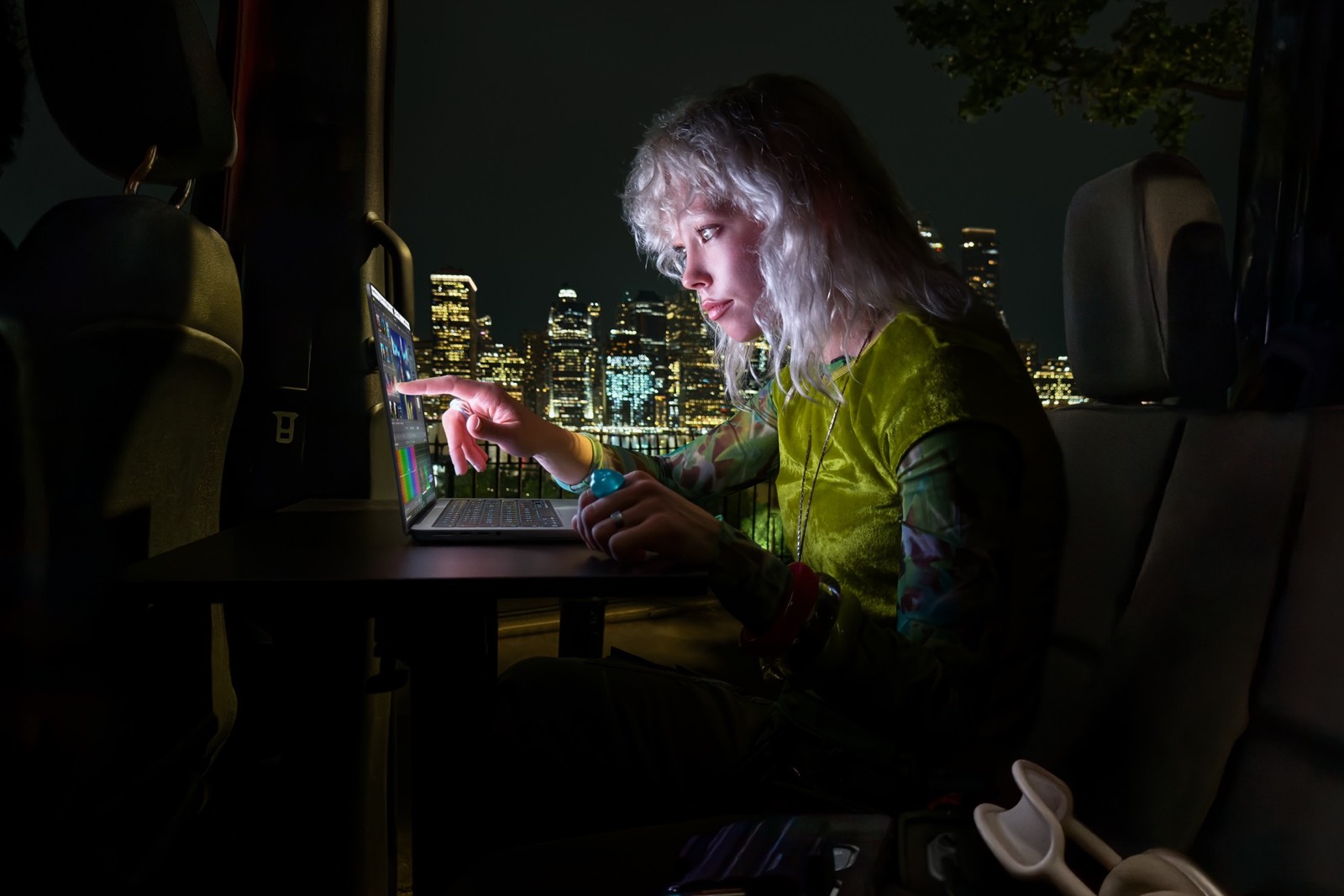
The glowing apple does not export a film any faster, and it does not make the touchscreen more precise. It is a sign pointed at other people, tied to a screen brightness you set for yourself. For ten years Apple decided the sign was not worth a hole in the lid. It is back on the expensive models, in a form the company has not described, on a laptop whose pictures still prefer to show you the display.
Ternus’s joke works because people missed the light. Missing it is not the same thing as needing it. The old reasons for taking it away were about the screen you actually look at: sun through the cutout, a thin lid, a brighter panel. Those reasons have not been answered in public. They have been decorated.
The final question
When the apple across the table lights up again, are you looking at the laptop, or at the fact that someone wanted you to notice?